Laminating lead foil for materials testing and medical technology: Technical requirements that matter in practice
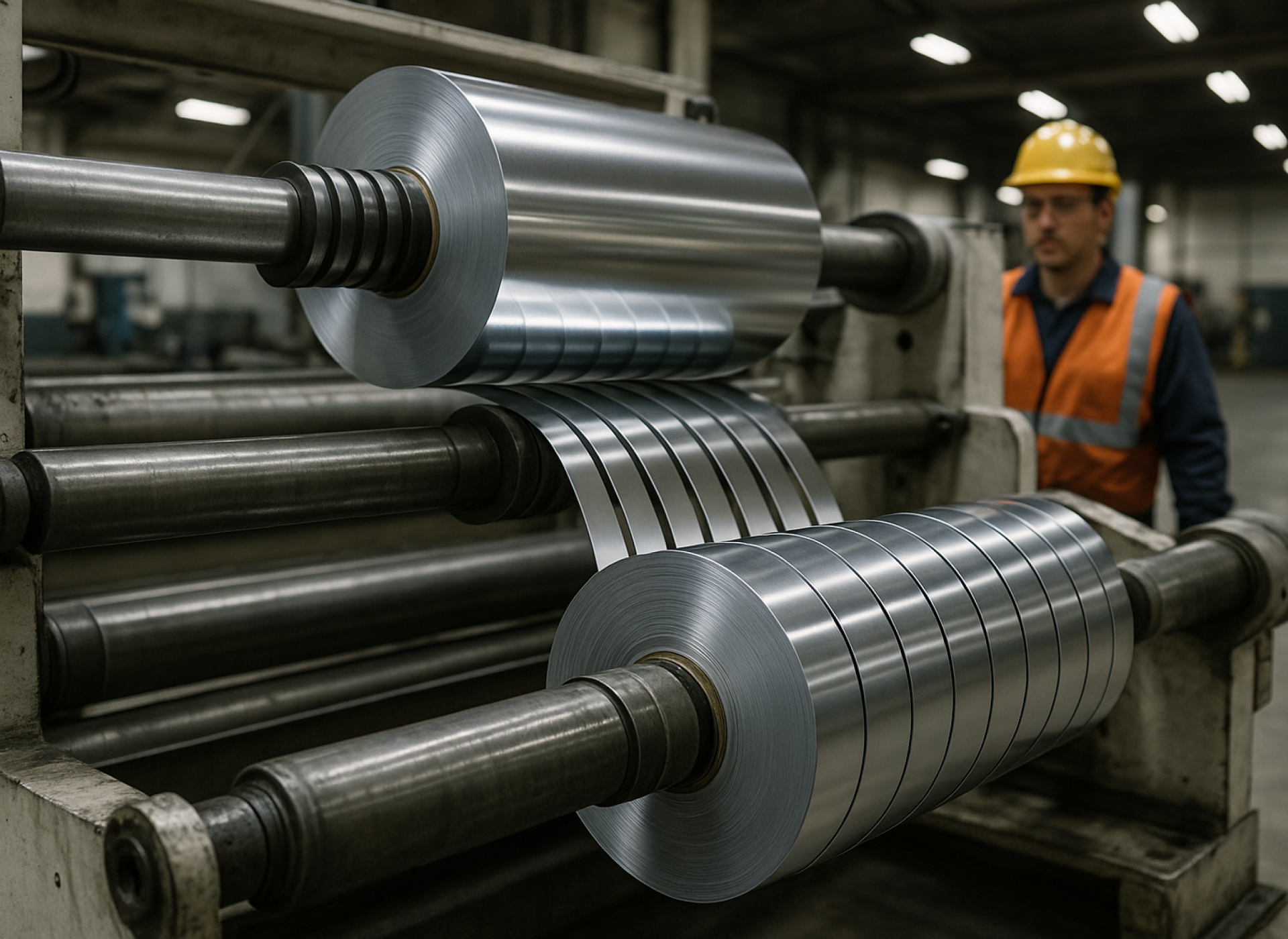
In industrial applications, lead foil is not an off-the-shelf standard material; it is a highly specific functional layer. Especially in materials testing and medical environments, shielding performance, processability, and reproducibility must be achieved at the same time. That is exactly why laminating lead foil is the decisive step for many applications: only in a composite does the metal become a robust technical solution.
As a lead foil manufacturer, EppsteinFoils specializes in precisely rolled and further processed foils. For customers, this means a clearly defined build-up instead of trial and error during live operations.
Why Composite Design Is Essential in Practice
Pure lead foil provides high shielding performance; in many applications, however, that alone is not enough. Process reality often means mechanical load, cycle-time handling, integration into components or test procedures, and requirements for surface behavior and/or insulation. This is where metal foil lamination comes into play.
A technically clean metal-foil composite combines the lead layer with carrier materials and functional layers, for example to improve processability, deliver defined stability, or add barrier properties. This is particularly relevant for:
- materials-testing foils in X-ray inspection
- lead-foil radiation shielding in sensitive environments
- demanding solutions in medical metal-foil applications
The technical foundations can be found in Laminating, Rolling, and Cutting.
The Underestimated Lever: Process Chain Instead of Single Parameters
Many specifications focus too heavily on nominal thickness and too little on the full process chain. In practice, what matters is the interaction of:
- lead-foil rolling with stable tolerances
- precise lead-foil cutting for reproducible geometry
- suitable lamination for mechanical and functional requirements
- clear qualification criteria for downstream processing
If one of these points is not clearly defined, familiar follow-up problems emerge: handling variation, unreliable shielding performance in the final assembly, increased scrap rates, or unnecessary rework.
Applications with High Responsibility
Materials Testing and X-ray Environments
In non-destructive testing, metal foil for materials testing, X-ray foil, and intensifier foil for X-ray film are not interchangeable terms. Different test methods require different material and composite concepts. Reliable test results depend on homogeneous material structure; process-safe integration additionally requires controlled converting.
Medical Technology and Diagnostics
In medical contexts, material transparency, traceability, and documented quality are mandatory. Applications such as defibrillator foil, defibrillator-foil supplier requirements, or components close to body electrodes therefore require both a technical and a regulatory perspective. This is exactly where specialized non-ferrous metal foils and clearly defined composite structures prove their value.
Wording That Stays Technically Precise
Terms like lead foil X-ray, lead foil for radiation shielding, lead foil X-ray room, or lead foils are often used imprecisely in the market. For engineering and purchasing decisions, that ambiguity is risky. A better approach is to specify along function:
- What shielding performance is required?
- What mechanical load is present in the process?
- What converting setup is required?
- Which standards and verification documents are relevant?
With this logic, a search term turns into a robust technical specification.
Precision Does Not Start at the End
Anyone who treats laminating lead foil as a strategic process step improves not only material behavior, but the overall process stability of the final application. In materials testing and medical technology, that is not a luxury; it is a prerequisite for reliable results.
EppsteinFoils positions itself accordingly as a technical partner: from material selection through rolling and cutting to application-specific lamination. This exact manufacturing depth makes the difference when a foil product must become a robust solution.