Around one million euros for our rolling mills – What lies behind the modernizataion
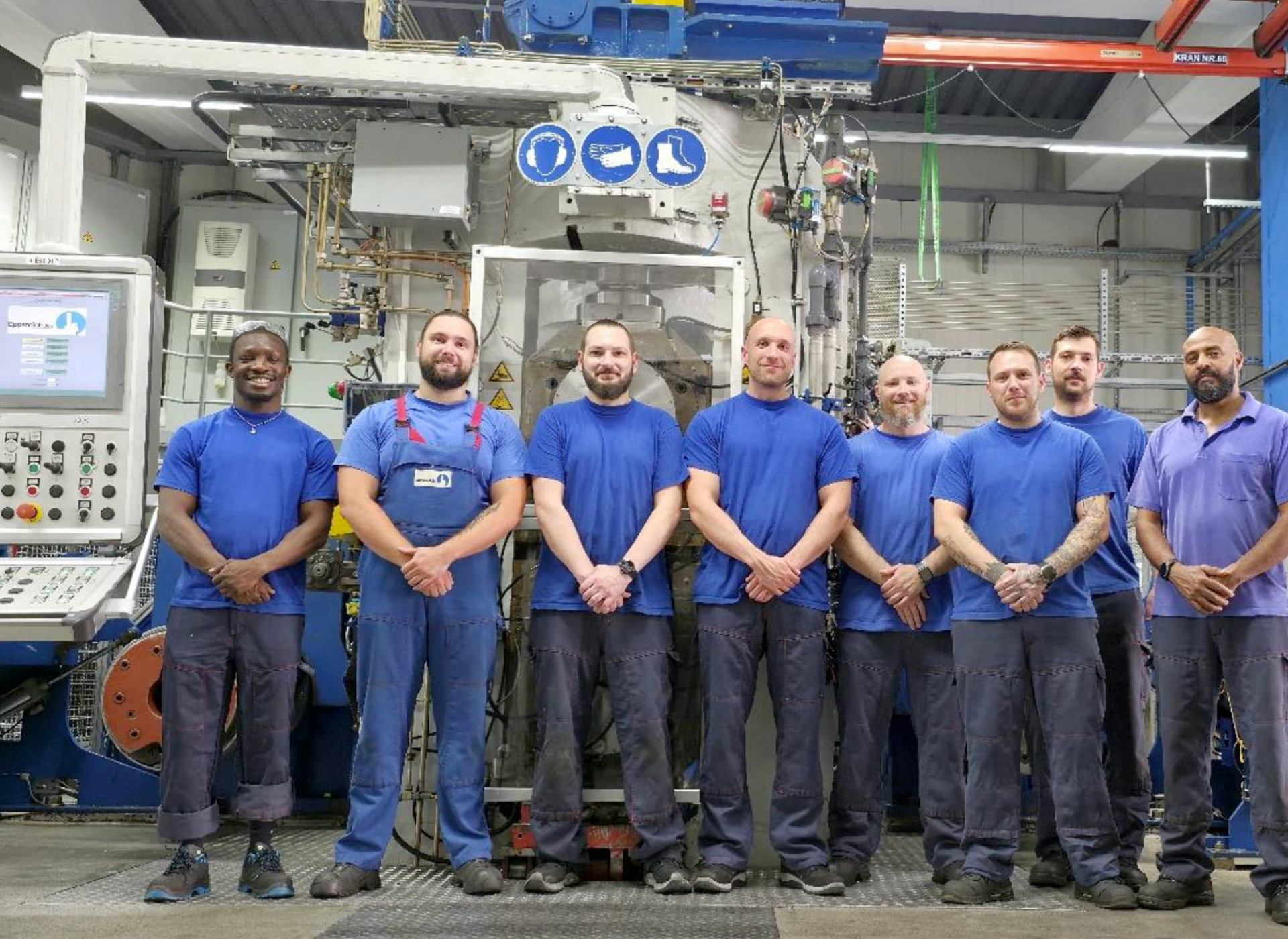
We are investing in the future of our production: two rolling mills are getting new controls, new measurement technology and a safety concept built to the latest standards.
When you walk through our production hall right now, you might not immediately notice what is changing. The roll stands are where they have always been. The machine beds – weighing tonnes, solid and built to last for a very long time – stay right where they are. And yet, around one million euros are going into the modernisation of two of our rolling mills at this very moment. What is changing is everything that controls, monitors and safeguards these machines.
A New Brain for Proven Muscle
Think of a rolling mill like a body: the machine bed and the roll stand are the skeleton – stable, long-lasting, fundamentally solid. But the controls, sensors and safety systems? That's the nervous system. And just like a nervous system, it needs to keep pace with the times if the body is to remain capable.
In the current project, we are renewing the complete functional units of both mills while retaining the proven mechanical foundation. In concrete terms, that means a new plant control system that regulates faster and more precisely. A modern optical measurement system for thickness measurement, replacing the previous radiometric technology. And machine safety brought up to the current state of the art.
From Radiation Source to Light Beam
One detail deserves particular attention: the switch from radiometric to optical thickness measurement. Until now, foil thickness during rolling was measured using a radioactive source – a method proven over decades, but one that comes with corresponding requirements for radiation protection, permits and regular inspections. The new optical system measures without contact and operates without radioactive sources, while delivering at least equivalent measurement accuracy. For us, that means not only less regulatory overhead but also greater flexibility in day-to-day production.
Why We Build Our Own Machines
If you're wondering why we don't simply buy two new rolling mills, here's the thing: it's not that straightforward for us. We develop and maintain the majority of our machines in-house. There is a good reason for that. Our products – ultra-thin metal and composite foils for industries such as medical technology, electronics or photovoltaics – demand capabilities that no standard off-the-shelf rolling mill can deliver. So over the decades, we have built up our own process know-how and translated it into bespoke equipment. Anyone who understands these machines also understands why we prefer to modernise rather than replace them: the mechanical foundation is designed for longevity, and the knowledge embedded in it simply cannot be bought.
Tradition and Innovation – No Contradiction
Investments of this magnitude are not a given for a mid-sized company with around 100 employees. But they are necessary if you want to continue producing foils at the quality level our customers around the world expect from us. More than 80 per cent of our production goes to export – precision is not a bonus, it's a requirement.
Our Managing Director Dr Marco Holst sums up the philosophy behind it: "This philosophy reflects our role as something of a one-of-a-kind in the German industrial landscape: traditional materials and production processes, underpinned by forward-thinking and innovative methods. This significant investment in our machinery takes us another step into the future."
What This Means for Our Customers
At the end of this modernisation, two rolling mills will stand that are mechanically as robust as they have ever been – but operating with controls and measurement technology that represent the latest state of the art. The result: higher efficiency, even tighter tolerances, and another step towards a production capability that will meet the highest standards for decades to come.
Because that is precisely our aspiration at EppsteinFOILS: over 170 years of experience with metal foils – and never standing still.