Photovoltaic Tin Foil in Practice: Why Material Precision Determines Yield and Process Reliability
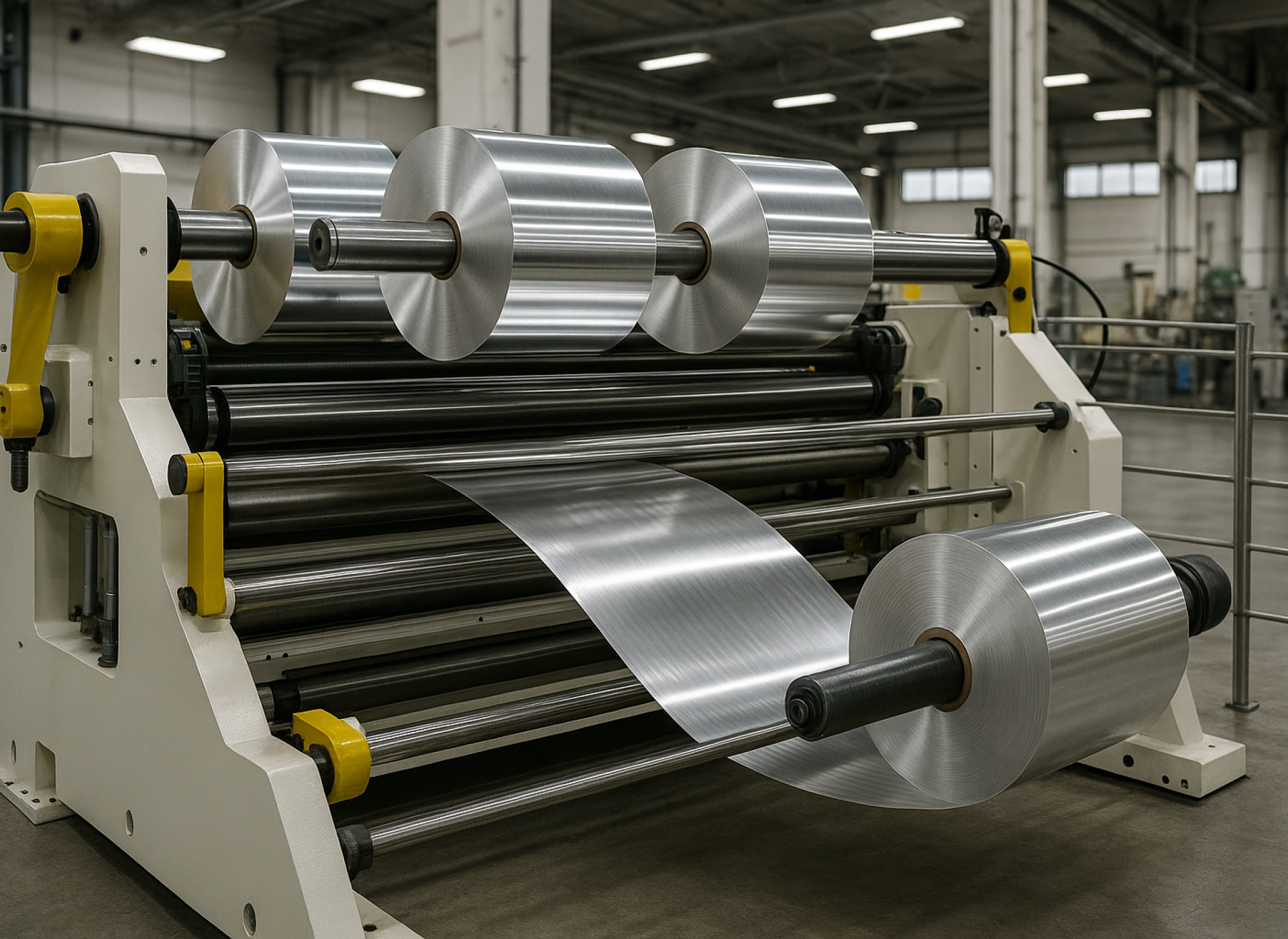
People talk a lot about cell chemistry and efficiency. They talk far less about interconnection. Yet that is exactly where tin foil quality decides whether a solar line runs stably or produces creeping scrap.
Anyone manufacturing photovoltaic modules in series needs foil that does more than satisfy a datasheet. The foil must match the process: thickness tolerance, surface quality, and mechanical behavior across the entire roll. Sounds obvious. In practice, it rarely is.
What Interconnection Really Requires
Tin foils for PV production operate under multiple constraints. They must stay within tight tolerance windows, provide a uniform surface for consistent wetting, run mechanically stable over thousands of meters, and remain reproducibly processable under cycle time and temperature conditions.
That sounds like a standard requirement. It is. But many materials meet those standards only on paper.
EppsteinFoils, as a non-ferrous metal foil manufacturer and tin-foil supplier, produces technical foils where rolling quality directly improves process stability. Clean tin-foil rolling reduces variation in solder patterns. Precise tin-foil cutting keeps edges and geometry stable even at high cycle rates. Details of these processes can be found under Rolling, Cutting, and Laminating.
When Foil Becomes a Composite
Pure foil is often not enough. As soon as electrical insulation, barrier properties, or mechanical stability are required, metal-foil lamination becomes relevant. Laminating tin foil then means thinking of carrier, adhesive system, and metal layer as one integrated system, not as a parts list.
Especially under changing conditions (temperature jumps, humidity, dynamic loads), a well-designed composite separates short-term functioning solutions from those that remain robust in the long run. This applies to the solar industry just as much as to electronics and materials testing.
Four Recurring Failure Patterns
Certain patterns keep appearing in production.
First: unclear tolerance windows. Ordering is nominal, but specification is not process-oriented. Second: unsuitable cutting quality. The result is feeding and contact-zone issues. Third: missing alignment with downstream processes. The material works in the lab, but not robustly in series. Fourth: no clear lamination definition. The composite is chosen without sufficiently considering real field loads.
If you want to avoid this, treat the specification as a technical control instrument, not as a purchasing form.
Terms That Are Not Cosmetic
In practice, many things are grouped under “metal foil.” But terms such as non-ferrous metal foil, thin metal foil, or precision metal foils represent real differences in material, structure, and process window. Whether the topic is metal-foil rolling, cutting, or which foil works on a circuit board: supplier and customer must speak the same language.
EppsteinFoils has built a clear structure for this purpose across Applications, Solar, and Technology.
In the End, the Line Decides
Whether photovoltaic tin foil runs stably in series is decided neither in purchasing nor in the lab. It is decided on the line; where tolerances collide, where cycle time meets material behavior, where small deviations have large effects.
For companies that want to build resilient interconnection in solar manufacturing, choosing the right tin foil is not a side topic. It is a core building block of process architecture.