Tin Foil for Packaging – Protection, Design, and Function
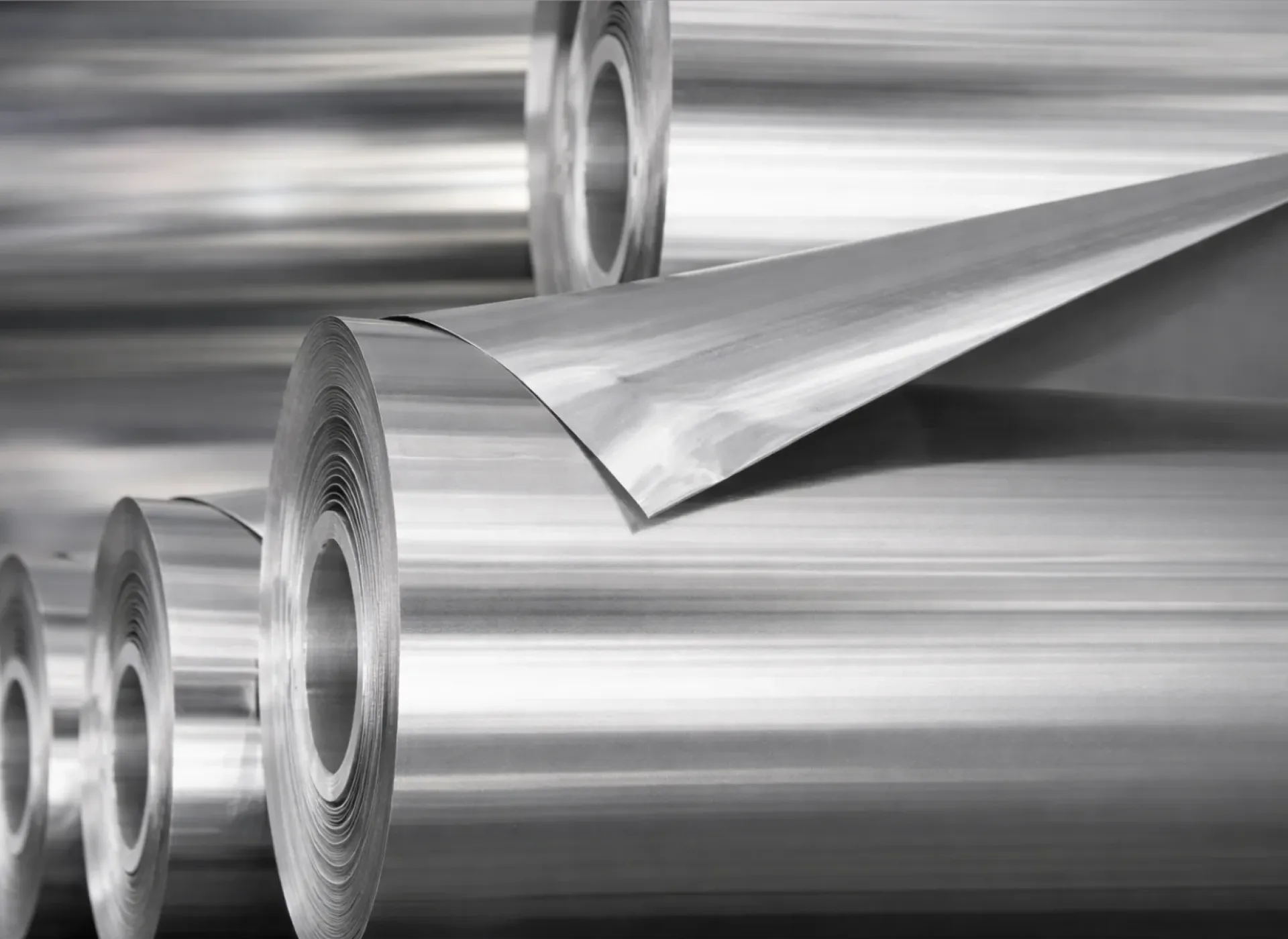
Packaging solutions today face a complex set of requirements. They must reliably protect products, comply with regulatory standards, be manageable in processing, and at the same time meet aesthetic expectations. Especially for sensitive goods—such as those in the food, pharmaceutical, or technical industries—metallic barrier foils are becoming increasingly important. Tin foil occupies a special position here, as it combines excellent protective properties with a high potential for refinement.
EppsteinFOILS manufactures precisely rolled tin foils that are specifically designed for functional packaging applications. They are not used as conventional end-consumer packaging, but rather as metallic functional and barrier layers within sophisticated packaging systems.
Requirements for Modern Barrier Foils
Barrier foils are designed to protect products from external influences that could impair quality, shelf life, or safety. These include, in particular, oxygen, moisture, light, foreign odors, and chemical migration. Metallic foils have a clear advantage over polymer materials in this respect, as they provide an almost complete barrier effect.
Due to its dense metallic structure, tin foil offers reliable protection against gas and water vapor diffusion. At the same time, its minimal material thickness allows integration into multilayer packaging laminates without significantly increasing weight or volume. This represents a decisive advantage for technical packaging or high-quality product packaging.
Migration and Food Safety
In food-contact applications, migration is a key issue. Packaging materials must not release substances into the product that could compromise its safety or quality. Metallic barrier foils are therefore often used as functional separation layers to prevent critical interactions between the product and outer packaging layers.
Thanks to its stable material structure, tin foil is particularly well suited for this purpose. In laminated composites, it forms a defined metallic barrier layer that reliably minimizes migration. This requires precisely controlled manufacturing, uniform thickness, and a clean surface—criteria that are central to production at EppsteinFOILS.
The foils are not used as stand-alone packaging, but as components of multilayer systems that are specifically tailored to regulatory requirements and industry-specific standards.
Processing, Lamination, and Integration into Composite Systems
For use in packaging, the processability of the foil is crucial. Tin foils from EppsteinFOILS can be laminated, cut, and stamped and are designed for integration into composite materials. When combined with paper, cardboard, or polymer substrates, packaging solutions are created that are both mechanically stable and highly effective in functional terms.
The uniform flatness and surface quality of the foil facilitate reliable downstream processing in industrial production lines. At the same time, the metallic barrier function is fully preserved. This is particularly relevant for technical packaging or premium consumer goods, where protective performance and visual appearance are equally important.
Design, Finishing, and Printability
In addition to functional protection, the appearance of modern packaging is playing an increasingly important role. Tin foil offers unique design possibilities in this regard. Its characteristic metallic sheen conveys value, precision, and quality—attributes that can be deliberately used for brand positioning.
Tin foils can be finished, embossed, or printed using suitable processes, provided they are part of a laminated composite material. The metallic surface can be intentionally left visible or concealed as a functional inner layer. Both approaches offer creative freedom for packaging designers and product developers.
Especially for premium packaging, special editions, or technical products, the combination of metallic barrier performance and design flexibility supports differentiation in the market.
Tin Foil as a Functional Packaging Component
Compared with purely plastic films, tin foil offers long-term stable barrier performance that remains unaffected by environmental conditions such as temperature or humidity. It is dimensionally stable, resistant to aging, and can be precisely tailored to the specific application.
EppsteinFOILS does not view tin foil in packaging applications as a mass material, but as a precisely manufactured functional foil for demanding systems. Close collaboration with processors and packaging manufacturers enables the provision of precisely defined material solutions that can be reliably integrated into existing processes.
Functional Barrier Foil with Added Value
Tin foil combines protective performance, process reliability, and design potential in a technically mature material solution. As a component of modern packaging systems, it helps to reliably protect sensitive products, meet regulatory requirements, and simultaneously realize high-quality design concepts.
With precisely rolled tin foils, EppsteinFOILS provides a technically sophisticated foundation for packaging solutions in which function and quality take priority.
Metal Foil as a Material in Medical Technology – Requirements & Standards
Medical technology is one of the most demanding application fields for materials. Components and materials used in diagnostic devices, therapeutic systems, or emergency care must meet the highest requirements for safety, reliability, and reproducibility. Metal foils play an important, often invisible role in this environment. As functional components, they perform tasks related to electrical conductivity, shielding, contacting, or energy transfer.
EppsteinFOILS manufactures precisely rolled metal foils—particularly from tin and lead—that are specifically designed for use in medical technology applications. Material purity, controlled properties, and compliance with regulatory standards are the primary focus.
Biocompatibility and Material Safety
In medical technology, biocompatibility is a key criterion. Materials must not cause harmful interactions with the human body and must be safe even in cases of indirect contact. Metal foils are therefore generally not used as freely exposed materials, but as functional layers within encapsulated or laminated systems.
Tin foil offers favorable conditions in this respect. It is chemically stable, well controlled in its composition, and can be precisely integrated into composite systems. In diagnostic and therapeutic devices, it is often used as a conductive functional layer or contact material without coming into direct contact with the patient. A reproducible material quality with uniform thickness and a defined surface is essential.
Regulatory Requirements: RoHS, SVHC, and Material Compliance
Medical technology products are subject to strict regulatory requirements. These include, among others, the requirements of the RoHS Directive and the evaluation of substances of very high concern (SVHC) under the REACH Regulation. Even though certain medical applications may allow exemptions, device manufacturers expect transparent and traceable material declarations from their suppliers.
EppsteinFOILS ensures that the composition of the metal foils used is documented and traceable. This facilitates integration into qualified supply chains and supports manufacturers in preparing technical documentation and declarations of conformity. Precise process control ensures that the foils exhibit reproducible properties—a fundamental requirement for regulated markets.
ISO Standards and Quality Requirements
In addition to legal requirements, international standards play a decisive role. In medical technology, ISO-based quality management systems are particularly relevant, especially in the context of component development, manufacturing, and validation. Metal foils must therefore be not only suitable in terms of material properties, but also produced under controlled conditions.
Production at EppsteinFOILS is designed to ensure consistent quality, documented process parameters, and tight tolerances. Thickness accuracy, flatness, and surface condition are continuously monitored to ensure that the foils can be reliably used in downstream medical technology manufacturing processes.
Typical Applications in Diagnostics and Medical Technology
Metal foils are used in a wide range of medical technology applications. In diagnostics, for example, they are used as conductive elements in sensors, measuring electrodes, or shielding components. Their uniform conductivity and defined geometry enable precise measurements and stable signals.
Metal foils also perform functional roles in imaging procedures or X-ray technology, for example as shielding or reinforcement foils. In these applications, not only material purity but also exact thickness is crucial to ensure reproducible results.
Emergency Care and Therapeutic Systems
In emergency medicine—such as in defibrillators or monitoring systems—metal foils are used as conductive contact and connection elements. They must safely withstand high current loads, mechanical stress, and changing environmental conditions. Thanks to its good conductivity, ductility, and solderability, tin foil is particularly well suited for these applications.
Precise rolling ensures that the foils deliver consistent performance even at minimal material thickness. At the same time, they can be cut, laminated, or integrated into assemblies without losing their functional properties.
Precision Metal Foils for Regulated Applications
Metal foils are indispensable functional materials in medical technology. Their areas of application range from diagnostics and imaging to emergency care. Successful use depends on controlled material properties, standards-compliant manufacturing, and high process reliability.
With precisely manufactured metal foils, EppsteinFOILS provides a reliable foundation for medical technology applications in which quality, safety, and regulatory compliance are paramount.